



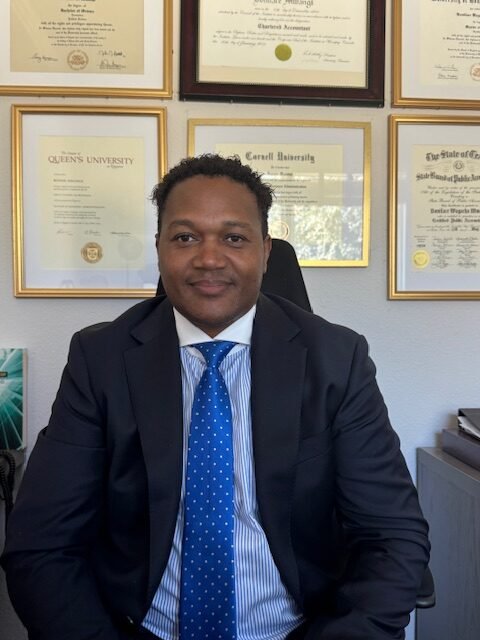
About bonnie mwangi
Meet Bonnie Mwangi
Over the years, I have worked as an Economist and Management Consultant, in the United States and Canada, and I am lucky to count many of the world’s premier companies as having been my clients at some point in time. During this time – I have worked as a leader and excelled in some of the world’s leading consulting firms such as Deloitte and Ernst and Young – providing economic expertise to clients and helping them navigate a challenging world, while creating value and solving real-world problems. My economic expertise is backed up by the sound financial principles that guide any excellent leader. These are not just technical skills — they are the very skills and principles Kenya needs today. In a country crippled by waste and corruption, the stewardship of taxpayer funds demands the same discipline, accountability, and excellence that define sound economic management. My mission is to bring those values — the prudence, purpose, and progress that I have lived professionally — into public service for every citizen our Great County of Kiambu. My governing philosophy is simple: Government exists to serve citizens, and not the other around. A Government that consumes 70% of all the resources available on itself, as opposed to serving citizens, is not really a government. It’s a cartel. I believe that the best way to evaluate the effectiveness of a Government is to ask how much of every shilling available actually ends up serving citizens.

Call Now
+1 469 469 9330


Address
697 Hilltop Street, Springfield, MA, USA
BONNIE MWANGI
Who is Bonnie Mwangi, CPA, LLM, MBA?
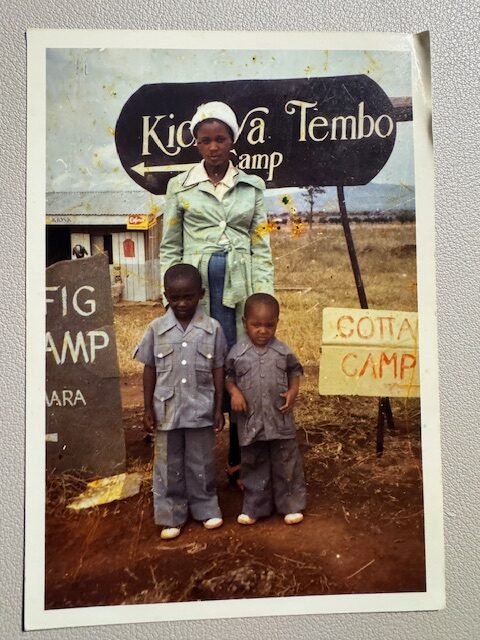
The simplest answer is that, I am you. Average guy from the average Kenyan family. I grew up in Kiambu County, the middle child in a family of three — my elder brother Patrick, my younger sister Sarah, and me. We were raised by one tough, determined woman — my mother, Mary Njeri. After a difficult divorce, she raised us alone. She didn’t have wealth, privilege, or much education, but she had grit. She ran a small business, worked tirelessly, and never complained about the hardships she faced.
From her, I learned the most important lessons in life:
- Don’t pity yourself — there’s always someone worse off.
- It’s not about where you come from, it’s about where you end up.
- Treat people with kindness — karma is real.
- If you are blessed, be a blessing to others.
Our Mission
We are dedicated to serving the community through transparent leadership, innovative solutions, and a commitment to positive change for all citizens.
Let’s Make Kiambu Great
His commitment to transparency inspires trust in our community.
Lets meet and help for education in Kiambu
Bonnie truly listens to our concerns and values our input

Lets make our healthcare work
Bonnie truly listens to our concerns and values our input
My mother lived by these words. She educated children of relatives and strangers alike — not because she had much, but because she believed deeply in spreading love and opportunity.
When I was 15, my mother asked what I wanted to do after high school. I told her I wanted to build a career, help others, and study in America. We made a plan. Every few months, she’d give me cash to deposit into a small savings account for my education. And years before I received my MBA from Cornell University in New York, I received the best business education a person can receive, from my mom. She taught me about business strategy, supply chain, negotiation, breakeven and profit analysis, and how to scale a business! By my final year of high school, I was a businessman, helping her run the business, and our plan for me to receive an American education, was on track.
Then tragedy struck. Three months after graduation, my mother fell gravely ill, and, after nearly three months in the hospital, she passed away. I was 18 — going on 38 – and suddenly responsible for raising my 15-year-old sister Sarah.
In that moment, I grew up, fast. I didn’t ask “why.” I didn’t feel sorry for myself. I knew that, as my mother taught me, that there were others who had it worse than me, as difficult as it was for me to even process it. I also felt like I had received all the training and mentorship in the world to succeed in that role of an 18-year-old parent! I became both a guardian and a brother. My sister’s future depended on the choices I made. And, I was not going to let short-term fun destroy my sister’s life. Never!
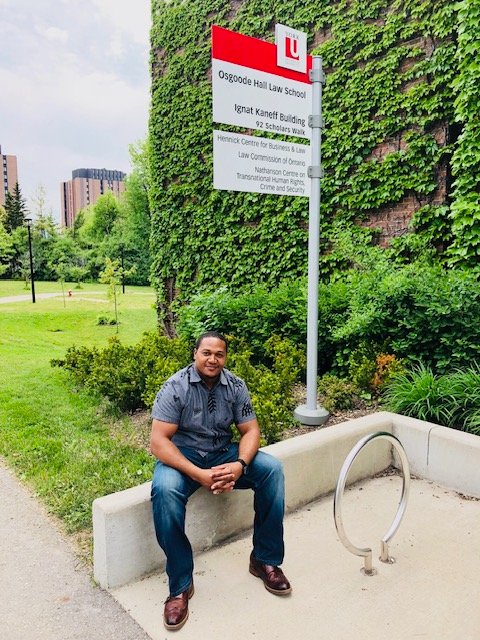
Through God’s grace, I made it to America. Despite my humble beginnings, my perseverance and insistence allowed me to earn an education that many can only dream of — including four master’s degrees, among them an MBA from Cornell University’s Samuel Curtis Johnson Graduate School of Management and a Master of Laws (“LLM”) in Business Law from Osgoode Hall Law School of York University (Toronto, Canada). I am also a Certified Public Accountant (CPA) in the U.S. and Chartered Professional Accountant (CPA) in Canada.